

 English
 русский
 中文简体
中文简体2026-02-02
Контент
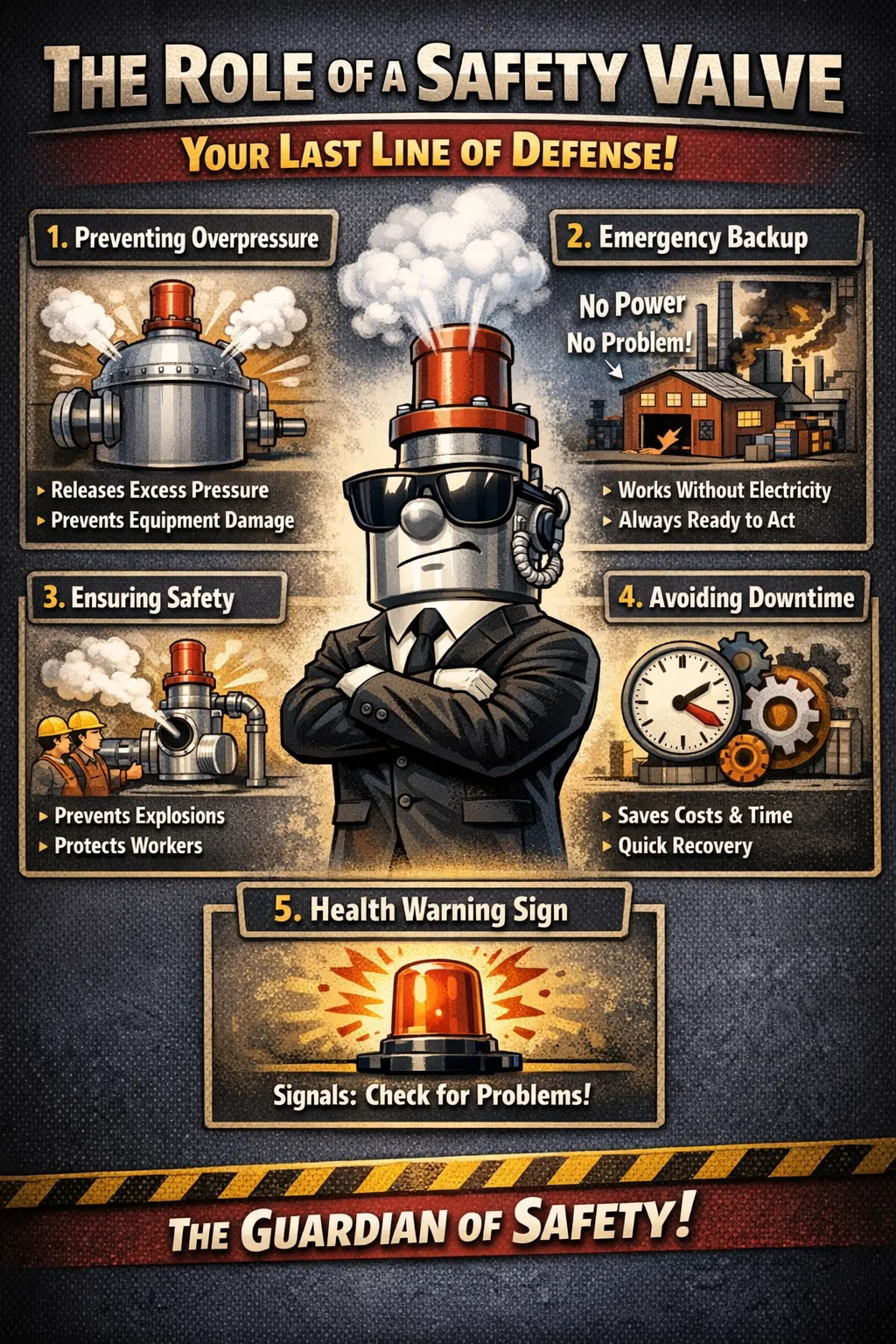
A safety valve plays the role of a "bodyguard" and "last line of defense" in machinery or piping systems. Its purpose is not to make the machine run faster, but to ensure the safety of the equipment and the surrounding environment in case of an emergency.
Here are the main functions of a safety valve :
1. Preventing equipment damage due to overpressure
This is its core mission. Imagine a sealed tank being continuously heated; the internal pressure will increase.
Automatic release: When the pressure reaches a point close to exceeding the tank's tolerance limit, the safety valve will automatically open like a sensible "vent," releasing the excess gas or liquid.
Physical protection: In this way, it ensures that the pressure never becomes high enough to burst the steel plate or rupture the pipes, protecting expensive equipment from becoming scrap metal.
2. Acting as an "emergency exit"
In a complex production system, there may be various sensors and computer control consoles, but electronic equipment can always experience power outages or malfunctions.
Works without electricity: The brilliance of the safety valve lies in the fact that it is mostly a purely mechanical structure. Even if the entire factory loses power and the computers crash, it can still open automatically based on the internal pressure of the system.
The ultimate safeguard: It is the "last resort" in the entire safety system; it only steps in when all the automatic control systems fail.
3. Protecting the safety of the working environment
If a high-pressure vessel suddenly fails due to excessive pressure, the consequences can be very serious.
Accident prevention: By releasing pressure in a timely manner, the safety valve can effectively prevent chain reactions caused by equipment damage, such as preventing high-temperature steam from spraying everywhere, or preventing flammable and explosive substances from spreading.
Personnel protection: It ensures that workers working nearby have a relatively safe environment and don't have to constantly worry about accidents happening to the surrounding machinery.
4. Saving costs and avoiding downtime
Although it seems like just a pressure relief component, it actually saves you money.
Reduced maintenance: With the protection of the safety valve, even if the system pressure fluctuates, it will not easily damage precision instruments or expensive seals.
Quick recovery: After pressure relief, once the problem is resolved, the valve can be closed, and the system can often quickly return to normal operation, avoiding prolonged production shutdowns due to extensive hardware damage.
5. Monitoring System's "Health Alert"
When the safety valve frequently opens or emits a venting sound, it's actually "calling out" to you.
Fault Alert: Its action is a warning that there's a problem with the pressure setting, or that the pump or heater upstream is malfunctioning. It uses this direct method to tell the operator to check the machine immediately to prevent a minor problem from becoming a major one.